
Navigating Optimal Nutrition
A comprehensive overview of dietary foundations, exploring the science of balanced eating, nutrient roles, and global food traditions.
The Cornerstone of Well-being: Defining Balanced Nutrition
Balanced nutrition refers to the consistent consumption of a variety of foods that collectively provide the body with the full spectrum of nutrients it requires to function effectively. Rather than focusing on any single food or nutrient, the concept centres on diversity, proportion, and regularity across food groups.
At its core, balanced nutrition encompasses three foundational pillars: the adequate intake of macronutrients, which supply energy and structural material; the sufficient presence of micronutrients, which regulate physiological processes; and consistent hydration, which underpins virtually every cellular function.
- Macronutrients
- The primary energy-yielding compounds in the diet: carbohydrates, proteins, and fats. Each serves distinct structural and functional roles beyond simple energy provision.
- Micronutrients
- Vitamins and minerals required in smaller quantities than macronutrients, yet essential for enzymatic reactions, bone development, immune function, and cellular communication.
- Dietary Variety
- The practice of consuming a wide range of foods across all major food groups, which reduces the likelihood of nutritional gaps while exposing the body to a broader range of beneficial compounds.
- Hydration
- The adequate daily intake of water to support digestion, circulation, temperature regulation, and the transport of nutrients throughout the body.

Building Blocks of Energy: Understanding Macronutrients
Macronutrients are the three primary categories of nutrients that provide the body with energy and the raw materials needed for growth, repair, and maintenance. Each plays a distinct and irreplaceable role in human physiology.

Carbohydrates
The body's principal fuel source, carbohydrates are broken down into glucose, which powers cellular activity. Complex carbohydrates found in whole grains, legumes, and vegetables release energy gradually and also contribute dietary fibre, which supports digestive health and satiety.
Simple carbohydrates, present in fruits and some dairy, provide quick energy release. The distinction between complex and simple forms is largely a matter of structure and how rapidly they are absorbed.

Proteins
Proteins are composed of amino acid chains and serve as the structural foundation of muscle tissue, enzymes, hormones, and immune components. The body can synthesise some amino acids, while others, termed essential amino acids, must be obtained through food.
Diverse sources including legumes, eggs, fish, poultry, and plant-based options such as tofu provide varied amino acid profiles, supporting the argument for dietary variety.

Dietary Fats
Fats are energy-dense compounds essential for absorbing fat-soluble vitamins (A, D, E, and K), producing hormones, and maintaining cell membrane integrity. Unsaturated fats, found in avocados, nuts, seeds, and certain fish, are widely present in diverse traditional diets.
Saturated and unsaturated fats differ in their molecular structure; understanding this distinction helps contextualise the role of different food sources in a varied diet.
Invisible Essentials: Exploring Vitamins and Minerals
Though required in comparatively small amounts, vitamins and minerals perform indispensable functions across virtually every system in the human body, from bone formation to neurological signalling.
Vitamin A
Supports vision, immune function, and cell differentiation. Found in orange and yellow vegetables, leafy greens, and animal-derived foods.
B Vitamins (B1, B2, B3, B6, B12, Folate)
A group of water-soluble vitamins involved in energy metabolism, nervous system function, and the production of red blood cells. Widely distributed across legumes, grains, leafy vegetables, and animal products.
Vitamin C
A potent antioxidant that contributes to collagen synthesis, wound repair, and the absorption of non-haem iron. Present abundantly in citrus fruits, bell peppers, and leafy vegetables.
Vitamin D
Facilitates calcium absorption and is integral to bone mineralisation and immune regulation. Synthesised in the skin upon sun exposure and present in fatty fish and fortified foods.
Calcium
The most abundant mineral in the human body, primarily concentrated in bones and teeth. Also involved in muscle contraction and nerve transmission. Sources include dairy, fortified plant milks, and leafy greens.
Iron
Central to haemoglobin formation and oxygen transport through the bloodstream. Found in legumes, red meat, spinach, and seeds. Absorption is influenced by the presence of vitamin C.
Magnesium
Participates in over 300 enzymatic reactions, including energy production, protein synthesis, and muscle and nerve function. Present in nuts, seeds, whole grains, and dark green vegetables.
Zinc
Supports immune function, wound healing, cell division, and protein synthesis. Found in legumes, seeds, nuts, and whole grains.

A Spectrum of Sustenance: Navigating Food Groups
Each food group contributes a distinct portfolio of nutrients. A varied intake across all groups is the basis for comprehensive nutritional coverage.

Fruits
Rich in vitamins, antioxidants, dietary fibre, and natural sugars. Whole fruits offer a broad range of phytonutrients that contribute to overall dietary quality when consumed as part of a varied diet.

Vegetables
Particularly notable for their micronutrient density and low energy content. Dark leafy greens, cruciferous varieties, and colourful produce each offer different nutrient profiles, reinforcing the value of variety.
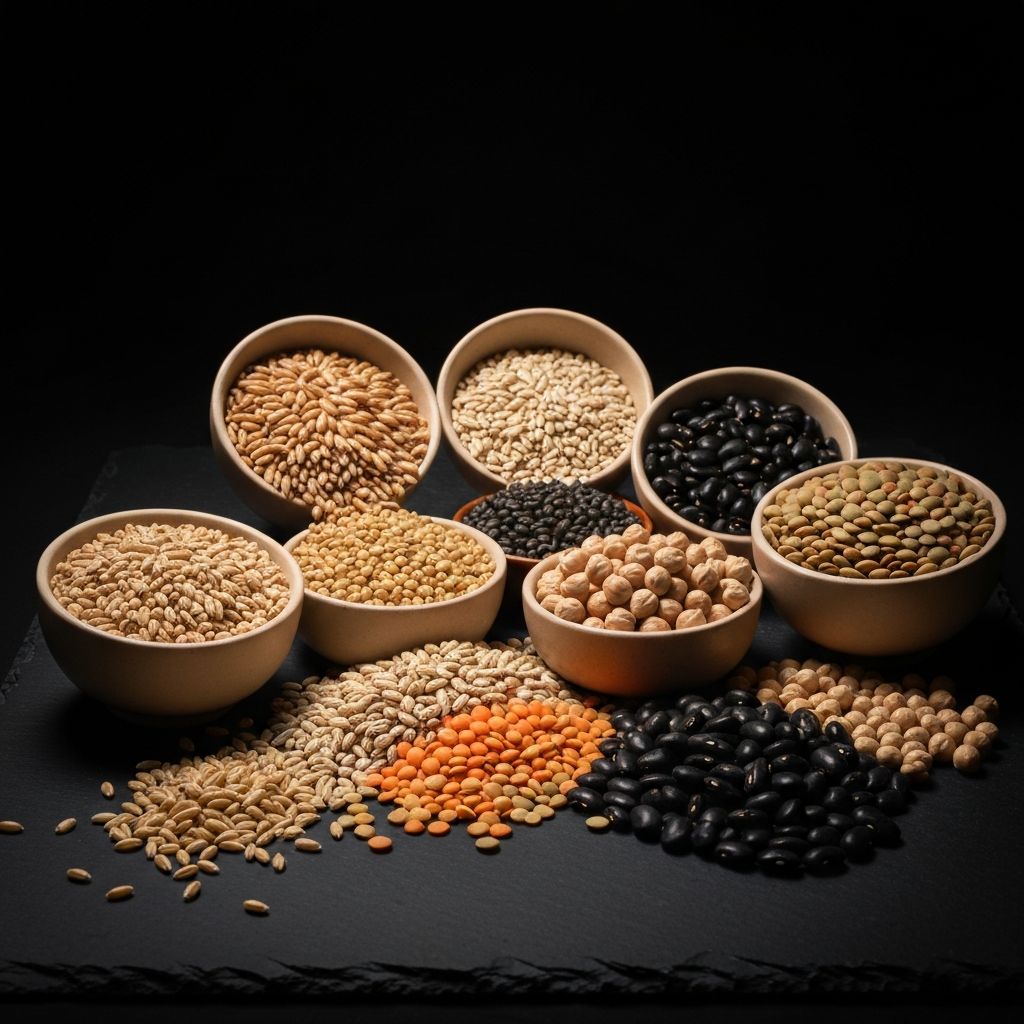
Grains and Legumes
Whole grains provide complex carbohydrates, B vitamins, and fibre. Legumes are notable for their protein content alongside complex carbohydrates, making them a significant component of many traditional dietary patterns worldwide.

Protein Foods
This group encompasses both animal-based and plant-based protein sources. Each type delivers a distinct amino acid profile along with associated nutrients such as iron, zinc, and essential fatty acids.

Dairy and Alternatives
Traditional dairy products are well-recognised sources of calcium, phosphorus, and protein. Fortified plant-based alternatives provide similar nutrients for those following different dietary practices.
Decoding the Plate: Interpreting Nutritional Labels
Nutritional labels are structured documents attached to packaged foods that communicate information about their composition. Understanding the standard sections of a label supports a more informed approach to selecting foods.
| Label Section | What It Communicates | Points of Consideration |
|---|---|---|
| Serving Size | The standardised portion to which all listed nutrient values apply. | All figures on the label refer to this quantity. A package may contain multiple servings. |
| Energy (Calories/kJ) | The amount of energy the food provides per serving. | Total daily energy needs vary considerably across individuals based on age, sex, size, and activity level. |
| Total Fat | The combined quantity of all fat types in the food. | Often broken down into saturated and unsaturated subcategories, which differ in molecular structure and food source. |
| Carbohydrates | Total carbohydrate content, including sugars and, in many countries, fibre. | The sugar figure reflects both naturally present and added sugars; fibre contributes to satiety and digestive function. |
| Protein | Total protein content per serving. | Does not distinguish between complete and incomplete protein sources; consultation with additional resources provides context. |
| Sodium | The quantity of sodium (a component of salt) present in the food. | General dietary guidelines note sodium in the context of overall dietary patterns rather than individual foods in isolation. |
| Vitamins and Minerals | Selected micronutrient content, typically expressed as a percentage of a reference intake. | Reference values are population-level averages; individual requirements may differ. |
| Ingredients List | All components of the food, listed in descending order by weight. | The first ingredient contributes the greatest proportion by mass to the final product. |
Global Plates: A Look at Diverse Dietary Traditions
Dietary patterns across the world have evolved over centuries in response to geography, climate, agriculture, and cultural practice. Examining these traditions reveals common structural principles underlying nutritionally rich food cultures.
The Mediterranean Pattern
Characterised by an abundance of plant-based foods, olive oil as the primary fat source, moderate fish and poultry, and minimal red meat. This pattern, documented across countries bordering the Mediterranean Sea, has been studied extensively within nutritional epidemiology for its structural characteristics.
- Emphasis on whole grains, legumes, fruits, and vegetables
- Olive oil as a central culinary element
- Regular inclusion of fish, especially in coastal regions
- Shared meals and seasonal eating as cultural practices
The Okinawan Pattern
Traditional dietary practices from the Ryukyu Islands of Japan feature a high intake of sweet potatoes, soy-based foods, and vegetables, with relatively low overall caloric density. This pattern reflects a historically agriculture-based culture with strong emphasis on plant variety.
- Sweet potatoes as a primary carbohydrate source
- Soy foods including tofu and miso as protein staples
- Low consumption of saturated animal fat
- Moderate portions as a cultural norm
The Nordic Pattern
Associated with Scandinavian countries, this pattern emphasises whole grains (particularly rye and barley), root vegetables, berries, fish, and rapeseed oil. Cold climate agriculture shaped its composition, favouring hardy crops and preserved foods.
- Rye bread and oats as staple grain sources
- Fatty fish such as herring and salmon as protein and fat sources
- Root vegetables including turnips, carrots, and beetroot
- Wild berries providing seasonal micronutrient variety
South American Andean Traditions
Andean dietary heritage, geographically proximate to Peru, centres on a remarkable diversity of native crops including quinoa, potatoes, maize, and a wide variety of legumes. This tradition illustrates how local biodiversity shaped nutritionally complete food systems long before formal nutritional science.
- Quinoa as a complete protein and complex carbohydrate source
- Hundreds of potato varieties native to the Andes
- Maize used across diverse preparations
- Legumes including various types of beans and lupins
From Plate to Power: An Introduction to Digestion
Understanding how the body processes food provides context for why the form and composition of what is consumed influences the availability of nutrients at the cellular level.

1. Oral Phase: Mechanical and Chemical Initiation
Digestion begins in the mouth, where chewing mechanically reduces food particle size, increasing the surface area available for enzymatic action. Salivary amylase initiates the breakdown of carbohydrates at this early stage.
2. Gastric Phase: Acid Environment and Protein Processing
The stomach receives the food bolus and subjects it to highly acidic gastric fluid and pepsin, an enzyme that begins dismantling protein chains. The muscular contractions of the stomach wall further homogenise the contents into a semi-liquid state called chyme.
3. Small Intestinal Phase: Primary Nutrient Absorption
The small intestine is the principal site of digestion and absorption. Pancreatic enzymes and bile from the liver further break down carbohydrates, proteins, and fats. The resulting simple molecules are absorbed through the intestinal wall into the bloodstream and lymphatic system.
4. Large Intestinal Phase: Water Recovery and Fibre Fermentation
The large intestine reabsorbs water and electrolytes from indigestible material. Dietary fibre that resists enzymatic digestion is fermented by intestinal microorganisms, producing short-chain fatty acids that support the intestinal lining.
5. Systemic Distribution: Nutrient Delivery to Tissues
Absorbed nutrients enter circulation and are transported to cells throughout the body, where they are used as energy substrates, structural components, or regulators of biological processes.
Integrating Knowledge: Pathways to Holistic Nutritional Wellness
The preceding galleries have traced a path from fundamental nutrient categories to their sources, their roles in physiology, and their cultural expression across the world. What emerges from this overview is not a set of prescriptions, but a framework for understanding.
- Dietary variety remains the most consistently cited structural principle across different food cultures and research traditions.
- Each macronutrient and micronutrient operates within a network of interdependencies; no single nutrient functions in isolation.
- Traditional dietary patterns across the world demonstrate that nutritionally complete diets can be built from diverse cultural and agricultural foundations.
- Understanding labels, food groups, and digestive processes provides a literacy for engaging with food in a more informed way.
- Hydration functions as an enabling condition for all other nutritional processes and is frequently underrepresented in discussions of diet.